If you’ve received a message that simply says ASL?, you may have wondered what it means. The ASL meaning in text has been around for decades and is still seen in chats, social media, gaming, and messaging apps.
While many people know ASL as American Sign Language, the abbreviation has a completely different meaning in casual online conversations.
People often search for this term because its meaning changes depending on the context. In one chat, someone may be asking a quick personal question.
In another, they may actually be talking about sign language. Understanding the difference helps you avoid confusion and reply with confidence.
What Does ASL Mean in Text & Chat?
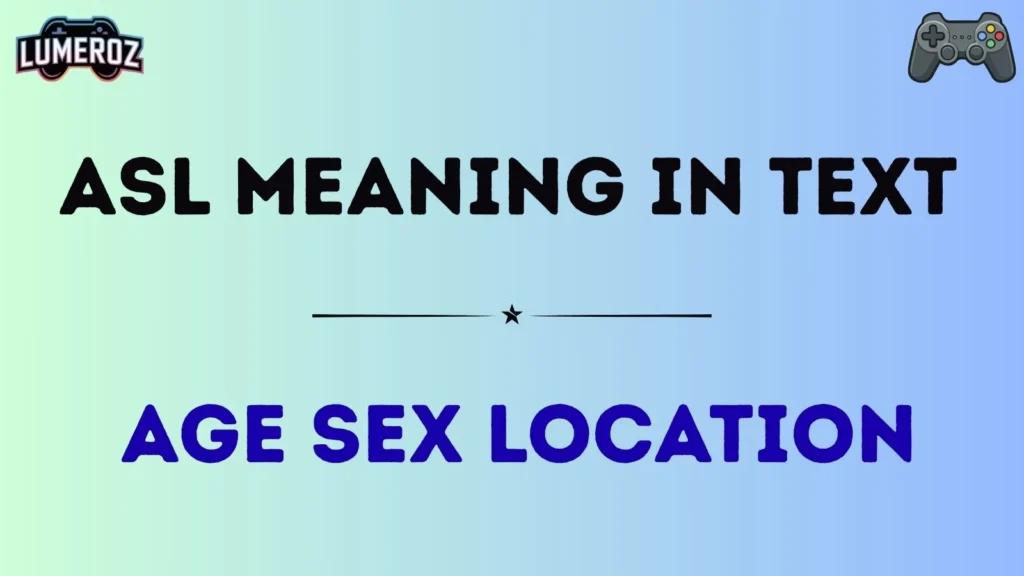
In texting and online chat, ASL usually means:
Age, Sex, Location
It is a quick way to ask someone three basic questions at once:
- How old are you?
- What is your gender?
- Where are you from?
Years ago, this was one of the most common icebreaker questions in online chat rooms. Instead of asking each question separately, people simply typed ASL?
Quick examples
- Person A: Hi!
- Person B: ASL?
Another example:
- Alex: Nice to meet you.
- Jamie: ASL? 😊
The person is asking for basic information before continuing the conversation.
Today, many people shorten the reply as well.
Example:
- ASL?
- 22, M, Canada.
Although the abbreviation is still understood, many users now prefer asking these questions individually because it feels more personal and respectful.
Key points
- ASL means Age, Sex, Location in most text conversations.
- It is commonly used as an opening question.
- The meaning depends on the context.
- It is less common today than it was in early internet chat rooms.
Full Form, Stands For & Short Meaning of ASL
The most common full form of ASL in online messaging is:
Age, Sex, Location
Each part has a simple purpose.
Age
- Your age or age group.
Sex
- Traditionally referred to male or female.
- Today, many people instead ask for gender or simply skip this question.
Location
- Your city, state, or country.
Example response
- 19, F, USA
- 27, M, UK
- 24, Canada
Notice that many people no longer include every detail, especially when chatting with strangers.
Other meanings of ASL
Depending on the conversation, ASL may also mean:
- American Sign Language
- Above Sea Level
- Age, Sex, Location
Always read the surrounding conversation before deciding which meaning fits.
Quick summary
- Most common text meaning: Age, Sex, Location
- Most common non-chat meaning: American Sign Language
Origin, History & First Known Use of ASL
The internet looked very different during the 1990s. Long before social media apps existed, people met in online chat rooms and instant messaging services.
During that time, typing was slower and internet connections were limited. Users created short abbreviations to save time.
One of the most famous was:
ASL?
It quickly became the standard opening question when meeting someone online.
Popular platforms where it appeared included:
- AOL Chat Rooms
- IRC
- Yahoo Chat
- MSN Messenger
Instead of introducing themselves with several sentences, people simply asked ASL?
As social media grew and privacy became more important, this habit slowly became less common. Many people now avoid sharing personal information with strangers online.
Despite this change, ASL remains a well-known internet abbreviation and often appears in memes, nostalgic conversations, and gaming communities.
Timeline
- Early internet chat rooms
- Instant messaging era
- Social networking websites
- Modern texting and gaming chats
Many younger users know the abbreviation from older siblings, internet culture, or memes rather than using it every day.
How People Use ASL in Daily Conversations
Although it is less popular than before, people still use ASL in casual conversations.
It usually appears when someone wants to learn basic details about another person.
Common situations
- Meeting someone in a gaming lobby
- Joining a group chat
- Talking to a new online friend
- Random chat websites
- Community forums
Chat examples
- Hey! ASL? 🙂
- Before we chat, ASL?
- ASL if you don’t mind.
Some people respond directly.
- 20, F, Australia.
Others choose to answer only part of the question.
- I’m 23 and from Texas.
Some simply ignore it if they do not feel comfortable sharing personal information.
Tips
- Only share information you are comfortable revealing.
- Be cautious when chatting with strangers.
- Respect someone’s choice not to answer.
ASL Meaning Across WhatsApp, Instagram, TikTok & Snapchat
Different platforms have different communication styles, but ASL can still appear across them.
Friends may jokingly ask:
- ASL? 😂
Since they already know each other, it is often used humorously.
People sometimes use ASL in direct messages when meeting new followers.
Example:
- Hey! ASL?
TikTok
ASL often appears in comments explaining old internet slang.
Example:
- Anyone remember when everyone asked ASL? 😄
Snapchat
It may appear when adding someone new.
Example:
- ASL before we chat?
Gaming chats
Players sometimes ask:
- ASL?
They may simply want to know who they are playing with.
The abbreviation is still recognized, although it appears less often than newer slang.
Different Meanings of ASL in Other Fields
Context is everything because ASL has several meanings beyond texting.
American Sign Language
This is the most widely recognized meaning outside internet slang.
Example:
- She is learning ASL.
Here, ASL refers to the visual language used by many Deaf and partially -of-hearing people.
Above Sea Level
Used in geography, aviation, and science.
Example:
- The mountain sits 2,000 meters above ASL.
Age, Sex, Location
The online chat meaning discussed throughout this article.
How to identify the correct meaning
Look at nearby words.
If the conversation includes:
- Deaf community
- Interpreter
- Sign language
It almost certainly means American Sign Language.
If the conversation involves chatting with strangers, it usually means Age, Sex, Location.
Common Confusions, Mistakes & Wrong Interpretations
Many people misunderstand ASL because it has multiple meanings.
Common mistakes
Mistake 1
Thinking every ASL means American Sign Language.
Not always.
Mistake 2
Assuming everyone still uses ASL online.
Many younger users prefer asking separate questions.
Mistake 3
Sharing too much information.
Remember that you never have to answer personal questions from strangers.
Avoid confusion
Always ask yourself:
- What is the conversation about?
- Is it a chat message?
- Is it discussing language or communication?
The surrounding context usually provides the answer.
Similar Terms, Alternatives & Related Slang
Many abbreviations are used alongside ASL.
Some common ones include:
- A/S/L
- DM
- BRB
- IMO
- IDK
- TBH
- WTM
- WYD
- WYO
- AFK
- SMH
Instead of saying ASL, people today often ask:
- How old are you?
- Where are you from?
- What should I call you?
Examples of ASL in Real Chat Situations
Here are some realistic conversations.
Example 1
- Alex: Hi! 👋
- Sam: Hey!
- Alex: ASL?
- Sam: 22, F, Canada.
Example 2
- Chris: Nice profile!
- Jordan: Thanks 😊
- Chris: ASL?
Example 3
- Gamer1: Anyone online?
- Gamer2: Yep!
- Gamer1: ASL?
Example 4
- Mia: Hello!
- Noah: ASL?
- Mia: I’d rather not share personal info.
These examples show that answering is always optional.
How to Reply When Someone Says ASL
There is no single correct response.
Option 1: Answer directly
- 21, M, USA.
Option 2: Give limited information
- I’m 24 and from London.
Option 3: Ask why
- Why do you ask? 🙂
Option 4: Decline politely
- I’d rather keep that private.
Option 5: Ignore the question
If the conversation feels uncomfortable, you can simply move on or stop replying.
Always prioritize your online privacy.
Is ASL Still Popular? Trends & Online Usage
ASL is no longer as common as it was during the early internet era.
Today’s users often communicate differently.
Instead of typing:
- ASL?
People usually ask:
- Where are you from?
- How old are you?
- Tell me about yourself.
Even so, ASL remains part of internet culture.
You may still find it in:
- Older forums
- Gaming communities
- Nostalgic discussions
- Meme pages
- Random chat websites
Many internet users instantly recognize the abbreviation, even if they rarely use it themselves.
Its popularity has declined, but its meaning is still widely understood.
FAQs:
What does ASL mean in text?
In most online chats, ASL means Age, Sex, Location.
Does ASL always mean Age, Sex, Location?
No. It can also mean American Sign Language or Above Sea Level, depending on the context.
Is ASL still used today?
Yes, but not as often as it was during the early internet and chat room era.
Should I answer when someone asks ASL?
Only if you feel comfortable. You never have to share personal information with strangers.
What is the full form of ASL?
In texting, the full form is Age, Sex, Location.
Where is ASL commonly used?
It may appear in text messages, gaming chats, online forums, WhatsApp, Instagram, Snapchat, and older internet communities.
Conclusion:
The ASL meaning in text is usually Age, Sex, Location, a classic internet abbreviation that became popular in early online chat rooms. While it is less common today, many people still recognize it and occasionally use it when meeting someone online.
At the same time, ASL can also stand for American Sign Language or Above Sea Level, making context essential for understanding its true meaning.
Whether you see it in a message, a game chat, or on social media, knowing the different meanings helps you respond naturally and avoid confusion.
Remember to protect your privacy online and only share personal details when you feel comfortable doing so.

I’m Robert Williams behind elvorym a space built for ideas that inspire, stories that connect, and insights that stay with you long after you’ve read them. I’ve always believed that words carry energy. The right ones can spark curiosity, shift perspectives, and open doors to new ways of thinking. That belief is what led me to create elvorym a platform where creativity meets clarity, and every piece is written with intention. Through my writing, I aim to bring value, positivity, and a fresh perspective to everyday topics. Whether it’s exploring ideas, sharing experiences, or breaking down complex thoughts into simple, meaningful insights, I write to connect with readers in a genuine way.